
I like writing dialogue. It’s fun, it’s “easy” because while they’re talking, I don’t have to figure out what everyone’s wearing or doing with their hands. It’s also one of the ways I use to flesh out characters, because people generally talk the same, there are subtle differences to their speech patterns or tword choice that I think reflect who they are. I’m going through some of the dialogue tools I use to help build my characters and help distinguish who’s who.
Word Choice
I think it’s hard to do an accent in just dialogue. You can put in some words here or there, but you’ll have to build a lot of that outside of the quotation marks. A lot of times, that’s another character noticing that they drawl or roll their r’s or enunciate things in a certain way). And you don’t want it to be overdone. Brady has a slight Pittsburgh accent, and obviously Lars still has a Swedish one, but I’m not spelling that out in every line they say. It would be distracting.
I try to grab a few words here and there that illustrate where they’re from. Brady’s got his occasionally “yinz” and “needs cleaned” (lots of dropped “to be” ‘s in Pittsburgh). Riley gets his “wicked” and Evan his occasional “eh.”
Beyond accents, I consider word choice with things like “ain’t” and beautiful monstrosities like “shouldn’t’ve.” And there are colloquial phrases like “you gotta be shittin’ me” that some characters wouldn’t be caught dead saying but others drop like they’re nothing. Just like in real life, there are definitely people who would wholeheartedly commit to these types of phrasing and others who absolutely wouldn’t, and as the author I have to figure out which ones my characters are.
Punctuation
I love punctuation. I use them all (and probably too much). But dialogue and prose don’t really follow the same rules. It’s spoken, so you need a way to indicate if characters are doing spoken things like stuttering and pausing. Lots of ellipses and dashes doing the heavy lifting for those moments, and fillers like uh and er.
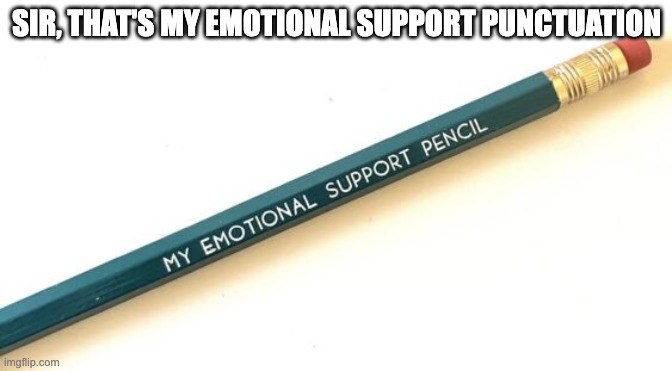
But there’s also a lot of other punctuation choices that I make in dialogue that I don’t worry about in prose. I know some people stick to just the basics in dialogue and I think that’s very valid. Most of the time, we speak in short sentences with maybe a comma or two. Most people don’t “speak with semicolons and parentheses.” Riley wouldn’t purposely use a semicolon when he’s writing, so he sure as heck isn’t speaking in a way that necessitates them. I think most of my hockey players are like that: simple speech patterns that don’t get spicier than a comma. But when I’m writing historical fiction or fantasy, i definitely have characters who “speak with semicolons.” Stigandr in particular comes to mind, where he could get into a diatribe on magic or history or politics, using all sorts of long, complicated sentences that need those fancy punctuation marks because that’s how he would write/think it. And that’s not a dig to say that characters who wouldn’t use a semicolon are in some way less smart or worse speakers or anything like that. They just… don’t do that. That’s not how they speak or write or think, and it would be strange to have that in their dialogue.
Punctuation is usually a consideration when I go through for edits. I just write and then by the end I have a better idea of who the characters are and what their quirks are. When I edit, I do tend to find more punctuation than ends up staying in dialogue because I’m the one who uses that punctuation, but I have to tweak things to be more fitting for that character. Sentences get split and shortened. And even Stigandr loses half his semicolons lol.
Text Messages
I don’t think I’ve ever written a contemporary romance that didn’t include at least one text message. It’s just such an ingrained part of modern life that it would feel weird to ignore it. If you’ve read Hockey Bois, that especially has a lot of messaging – both text message and FaceBook messenger – and so I spent a lot of time writing that kind of dialogue. Aside from being a pain in the ass to format (cries in margins and indentations), it’s a great way to show who a character is.
Take Nick Porter for example. The man has disabled all autocorrects on his phone so that it won’t get pissy with him about capitalizing the first letter of a sentence. You can’t say that doesn’t tell you something about him as a person. Then we’ve got our lovely Captain Benns who will write full edited paragraphs with commas and periods like it’s a corporate email. And of course there will always be the Brady Jensen’s of the world who would prefer not to be texting anyone at all and will leave as many “k” responses as he can get away with.
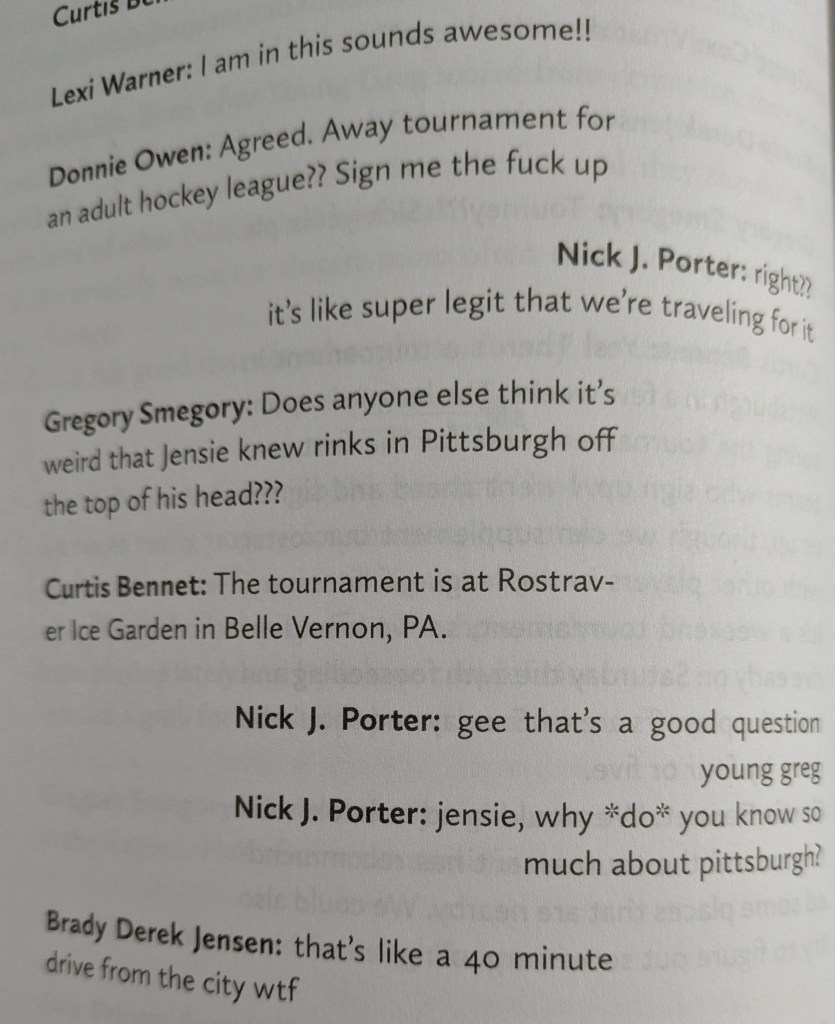
(Speaking of – a good character litmus test is if they are a k, ‘kay, or okay kind of person. Are they loling or 😂ing?)
I’ve heard and read several people say that emojis have no place in “real books” (do NOT get me started on this “real books” discourse that goes around). Well, Amazon now fully supporting emojis in ebooks says otherwise lol. Emoji usage by characters is very telling. Do they use them? Do they use them a lot? Are they using the standard ones like 👍 or do they have a more unique set that they draw from?
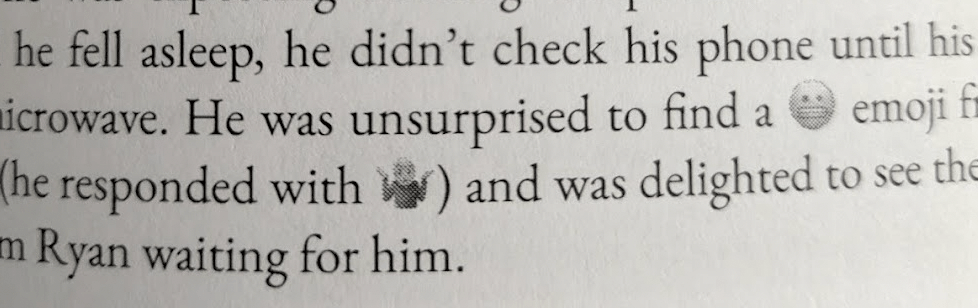
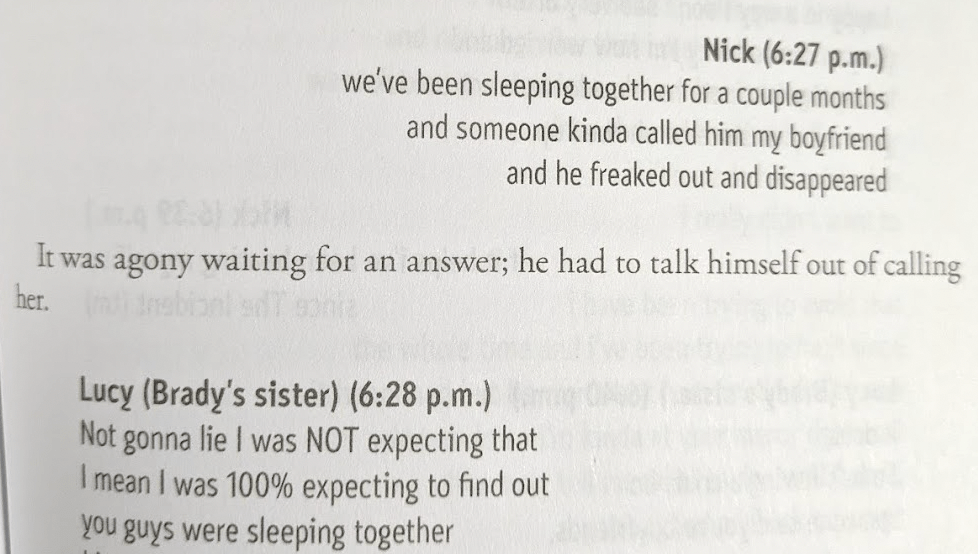
I don’t do it often because it’s such a pain, but there’s also the added fun of timestamps. You can build tension and character depth by showing how quickly or slowly they’re responding to messages, and the easiest way to do that is with a timestamp. I did it throughout Hockey Bois but committing to exact times of day, especially for NHL players who have “unique” schedules, was too much of a headache.
Outside the Dialogue
Not dialogue necessarily, but dialogue-adjacent – what’s happening while they’re talking?
I know in the intro I said it’s great during dialogue because I don’t have to write description, but that’s not 100% true, is it? It’s rare to get a conversation that’s just boom boom boom dialogue going back and forth with nothing else. At the very least you need dialogue tags like “said” and “asked” just to remind everyone who’s talking. Ideally, it’s clear because of what they’re saying or how they’re saying it, but we’ve all had moments where we zone out while reading or we had to put the book down and come back to it, and I don’t want people to spend years figuring out who said what when I can just put in the words “Evan said” and be done with it.
But usually the characters are doing things. They’re reacting to each other (soooo many eye rolls and glares and squints…), and they’re usually doing something. Even if they’re in the middle of an intense argument where it’s just the two of them shouting, they are probably moving in ways I can use to show how they feel. If their leg is twitching or they’re pacing or they’re avoiding eye contact to stare at the floor. And if it’s not that kind of intense moment, they’re probably doing something. They’re driving, they’re playing hockey, they’re working out, they’re eating. They didn’t just stop doing all those things to talk, and I think how they handle that multitasking is an interesting way to convey the character.
Do they talk while their mouth is full? Do they mess up their stickhandling because they’re distracted? Do they run into things while walking down a hallway? Do they change what they’re doing if someone else gets close to them? How much does this person fidget? All of these add a little spice to the character that helps you get a better picture of them.
Inner Monologue
Sort of dialogue but sort of not, there’s all the time the POV characters talk to themselves. Either out loud or just thinking, I approach it the same way as dialogue. All those word choices and sentence structure decisions that come out when they’re talking to someone else still play a roll, but there’s also the added fun of deciding, “Is this person a 1st or 2nd person self-talker?”
Do they think “You fucking blew it” or do they think “I fucking blew it”? Because the idea’s the same but there’s a nuance there that builds onto the character. Alone it doesn’t do much, but it’s another layer on top of all the other character building that’s happening.
Summary
tl;dr here’s a quick overview of considerations authors might want to make when looking at character dialogue!
☐ What accent does your character have?
☐ What words does your character favor? Never use?
☐ What kind of punctuation would your character use in dialogue? (Just commas and periods, or are they are dash, colon, and semi-colon kind of speaker?)
☐ Does your character use correct punctuation in text messages?
☐ Does your character use texting abbreviations like k, lol, or brb?
☐ Does your character send gifs and/or memes?
☐ What kind of emojis does your character use?
☐ Does your character fidget or get distracted during conversations?
☐ Does your character use 1st or 2nd person to talk to themselves?


Leave a comment