
I’ve talked about how much sports I put into my hockey romance stories in an earlier post, how I try to balance “hey this is a romance” but also “hey these are hockey players that play the sport professionally.” When I first wrote Hockey Bois, I created a Hockey Glossary told from the perspective of Nick helping Terry figure out hockey to impress his new girlfriend (available for free on itch.io!). Since I wrote it to go with Hockey Bois (beer league), it does NOT include some of the more NHL-specific info that comes up.
So with Drop the Gloves coming out later this year, I thought I’d pull in the main hockey terms that’ll come up specific to this story and The Trade Deadline.
The Basics
Face-off: The refs drop the puck at a dot on the ice. A player from each team lines up on one side of the dot to try and win the dropped puck back to their teammates.
Center: Evan Abernathy is a center. That means he is an offensive player or forward responsible for winning face-offs. They also have more defensive responsibilities than the other forwards.
Winger: Riley Barczyk is a right wing. That means he’s a forward who plays (generally) on the right side. Wingers are responsible for helping to drive offense.
Possession: When a team has control of the puck, that’s called possession. You obviously want as much of this as possible, since it increases your chances of scoring and decreases the chances of getting scored on.
Team Rosters
AAV: You’ll see this in some contracts for players and it refers to their Average Annual Value. When NHL players sign contracts, they might not necessarily make the same amount each year. The AAV shows what their average is across the contract, which is usually an easier way to think of it versus $4 million this year and the $2.5 for the next three or whatever.
Salary Cap: Each NHL team is given X amount of money that they are allowed to spend on player salaries. This is an attempt to keep the teams balanced so richer teams can’t just pay a bazillion dollars and get all the best players.
The Trade Deadline: This is a point during the regular season. Up until this point, teams are allowed to trade their players with other teams. Once this deadline is hit around February, they CANNOT trade anyone until after the season has ended. Teams tend to make a lot of trades at this time as they figure out if they’re trying to push for a long playoff run or try to get some deals.
Free Agency: When a player’s contract ends, they enter free agency. There’s a distinction between restricted and unrestricted free agents that’s way more complicated and I don’t really go into that ever because I don’t know that I fully understand it lol. BUT the main thing to know is that on July 1 (Canada Day!) contracts officially end and so new ones can be signed. If you watch the hockey world then, there’s the stress of wondering who your team is losing and the excitement of who your team is gaining. Riley starts the book as a free agent who signs with the Riveters.
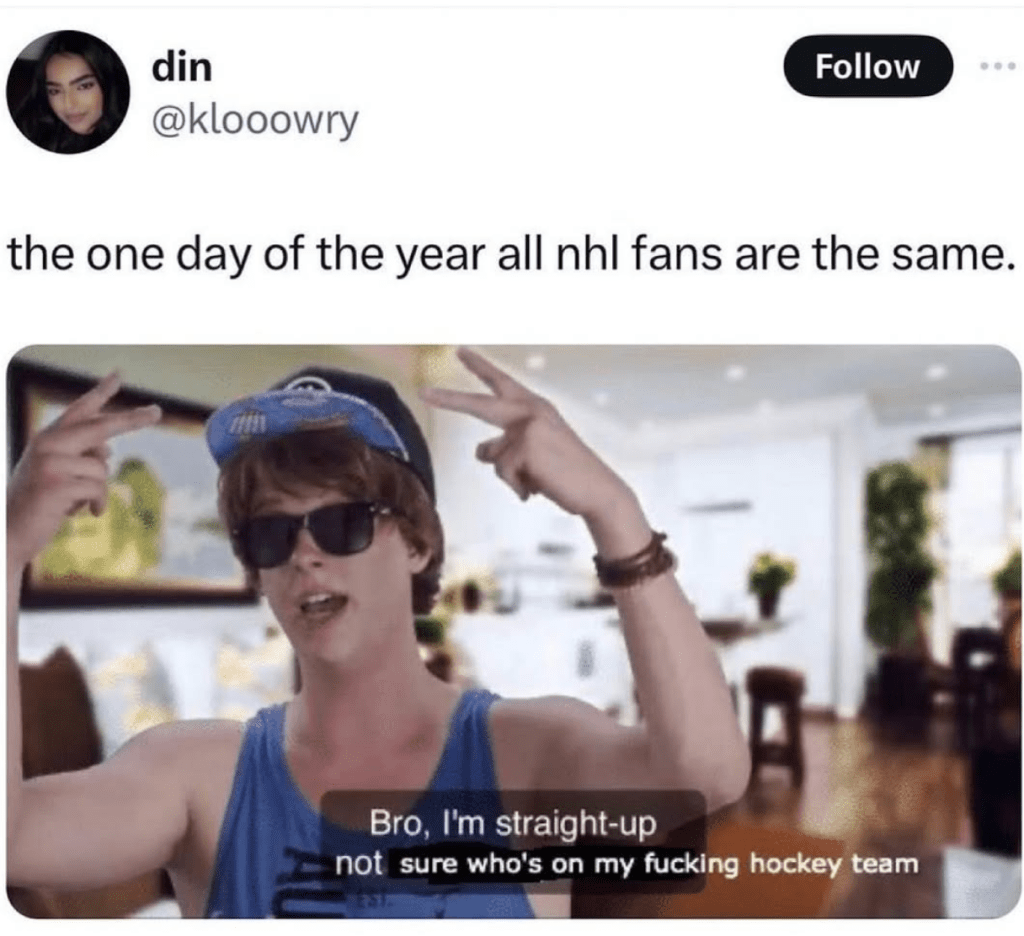
No Trade Clause: When players sign contracts, they can put in no trade or limited trade clauses. This means you can’t trade them without them first authorizing it. This a thing my characters are increasingly concerned about including in their contracts.
Niche Stuff
PIM: Penalties in Minutes refers to how many penalty minutes a player has been given. Most NHL penalties are 2 minutes (minor penalty), but sometimes there are more serious ones that are double minors (4 minutes), major penalties (5 minutes), and misconducts (10 minutes and game ejection). For a player like Riley who likes to fight, that number is going to be higher than average.
Gordie Howe Hat Trick: A regular hat trick is when a player scores three goals in a single game. The fans throw their hats onto the ice when this happens, thus the name. A Gordie Howe Hat Trick is a special type of “hat trick” where a player gets 1 goal, 1 assist, and 1 fight all in the same game. Ironically, Gordie Howe only ever got two of these during his 32 season career lol but the name stuck.
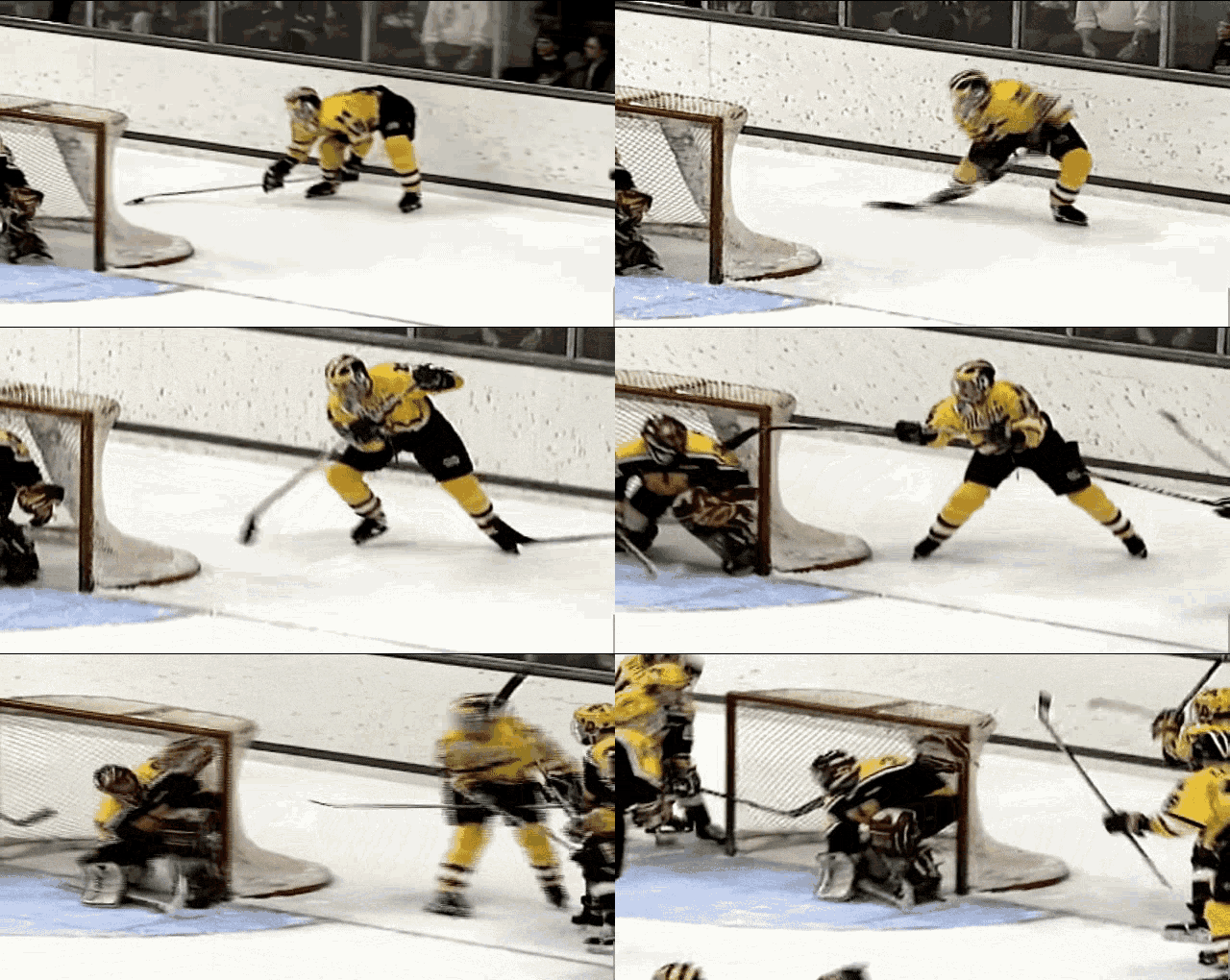
The Michigan: This is a lacrosse-style goal where the player lifts the puck onto the blade of the stick and tosses it into the net.
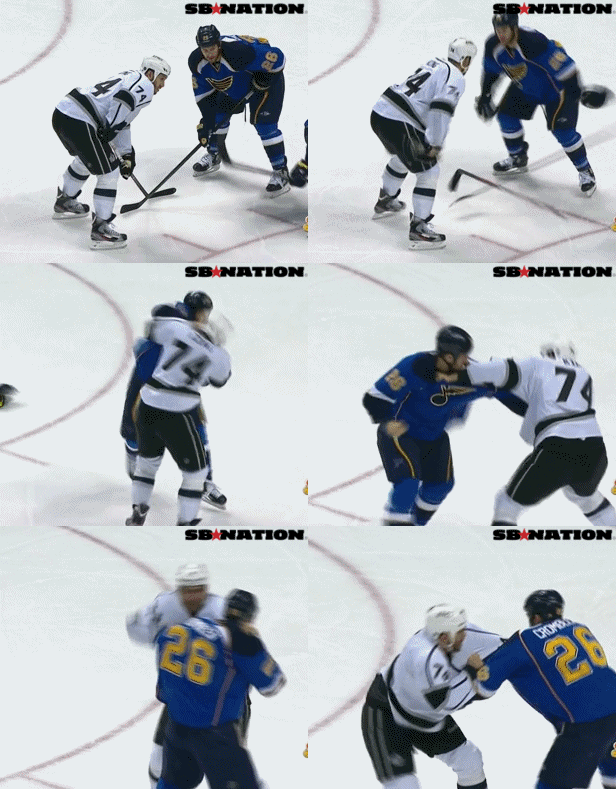
Drop the Gloves: Technically, hockey players aren’t allowed to fight. And yet there are also rules that dictate how they are allowed to fight when they do fight. They can’t have their gloves on when they fight, so they drop their gloves at the start.
Entry Level Contract: ELC contracts are signed by younger players when they enter the league and have more restrictions in terms of how much they’re allowed to earn. Sometimes there are caveats such as they have two-way and one-way contracts – two-way contracts mean they can be moved back and forth between an NHL team and that team’s AHL affiliate team; one-way contracts mean they CANNOT be moved to the AHL team. Entry level contract players also typically have roommates when the team travels (other ELC players); once they are on their regular contracts, they get their own rooms. Just before Drop the Gloves starts, Evan has finished his ELC and is now on a regular NHL contract.
Juniors: This can refer to a few things, but generally it’s what the younger players are in before they’re old enough for the NHL. There’s a World Junior Championship each year, which is where Lars and Ryan met. Riley mentions that he played with Ryan in Juniors (both for Team USA). But it can also refer to the leagues that younger players are in before that NHL eligibility. When Evan talks about his pre-NHL career, this is what he means.
AHL: The American Hockey League. Currently, all NHL teams have an AHL (and sometimes lower leagues) affiliate team, sometimes called their “farm team.” When younger players get drafted into the NHL, sometimes the team management doesn’t think they’re ready for the NHL and so they’ll have the players play in the AHL to “develop” them more. Depending on the skill level of the player, they’ll spend more or less time there. Lars and Anders spent no time in the AHL. Ryan spent a whole season in the AHL. Riley and Evan each spent part of their rookie seasons in the AHL (Evan moreso).
So that’s my quick and dirty summary of some hockey terms that come up in my NHL hockey romances. Did I miss any big ones?
 A.L. Heard
Leave a comment