
When I first published Hockey Bois in 2021, I was completely new to publishing, period. I had some stories out in the ether, mostly fanfic, but most of what I knew about self-publishing was what I’d seen from other authors who were doing it. There were probably tons of resources available, but I more or less jumped into the deep end on my own and figured it out as I went.
I’ve refined my process a bit since then. I’ve attended workshops, read through marketing tips from successful authors, and asked friends while keeping notes on what works for me. As I go through the process twice this summer with two very different projects, here’s what I do as I head into publishing and where I am in the process with each.
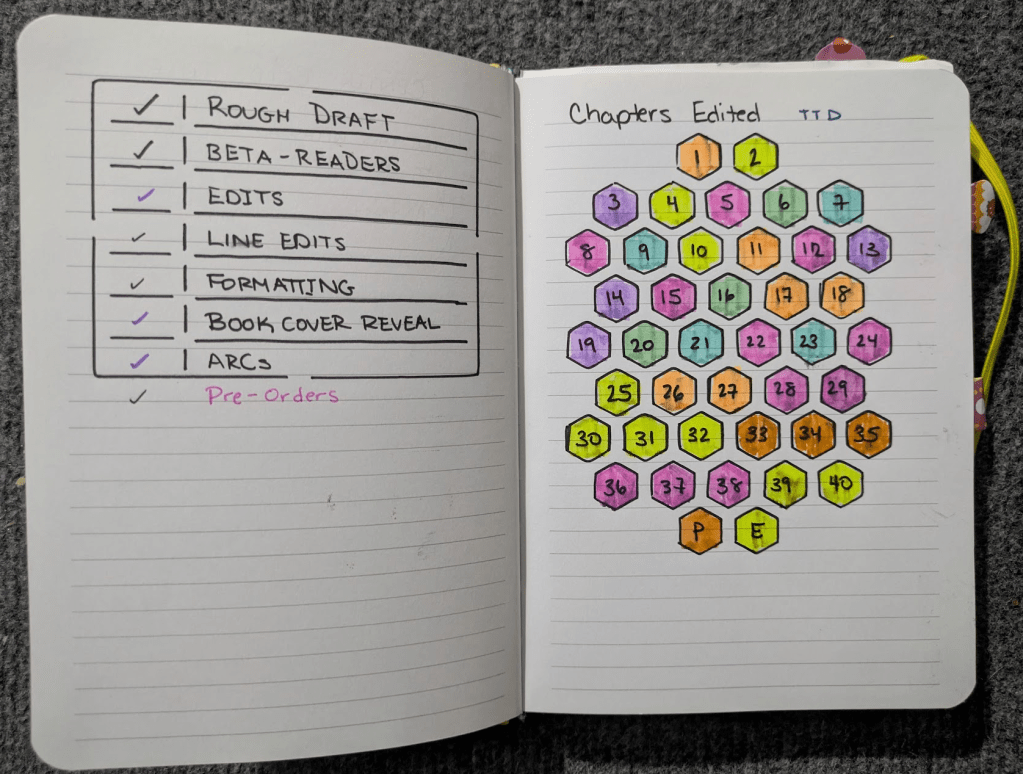
Obviously a rough draft comes first. Everyone has their own process for writing, outlining, etc and that’s not really what I plan to go into. This is more how I approach taking that draft and turning it into a physical novel (or ebook).
EDITS
Beta-Readers, Edits, and Line Edits are somewhat overlapping pieces.
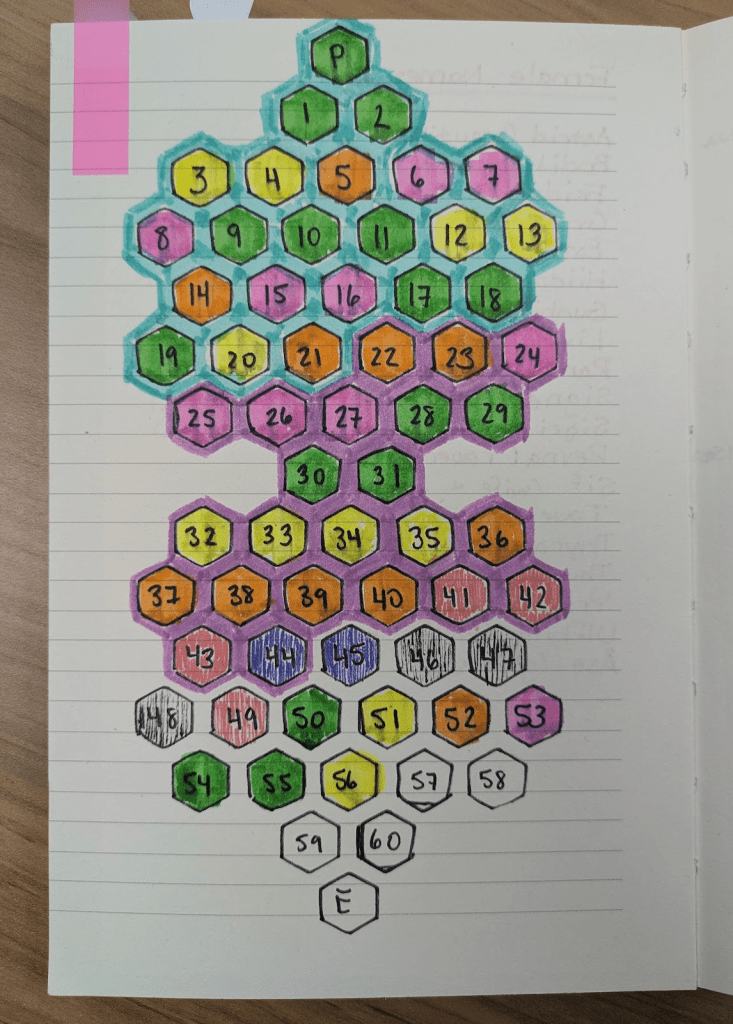
I do my own edits, reading through the book several times from the beginning to find errors. Obviously I try to clean up any spelling, grammar, and punctuation (SPAG) issues I find, but this is mainly where I go through to make sure the characters are consistent, the pacing works, and I haven’t messed up the details like the team roster or schedule.
This journal page shows my current progress editing Tessa of Hundrfeld. I highlight the hexes as I go, but the outlines around different groups represent Part 1 and Part 2. Part 3 is almost done!
I remember when I went through Hockey Bois for the first time, there was a piece of the Jagr Bombs Christmas party with Gail that made zero sense for Gail’s character as I knew her. When I’d first written the scene, she was a side character I hadn’t really planned to do a whole lot with, but as I kept writing and she appeared more and more (thanks, Terry 😂), re-reading that scene had me cringing. Gail wouldn’t have said or done those things, she wouldn’t have put Brady on the spot the way she had, so that was a scene that needed to be completely reworked.
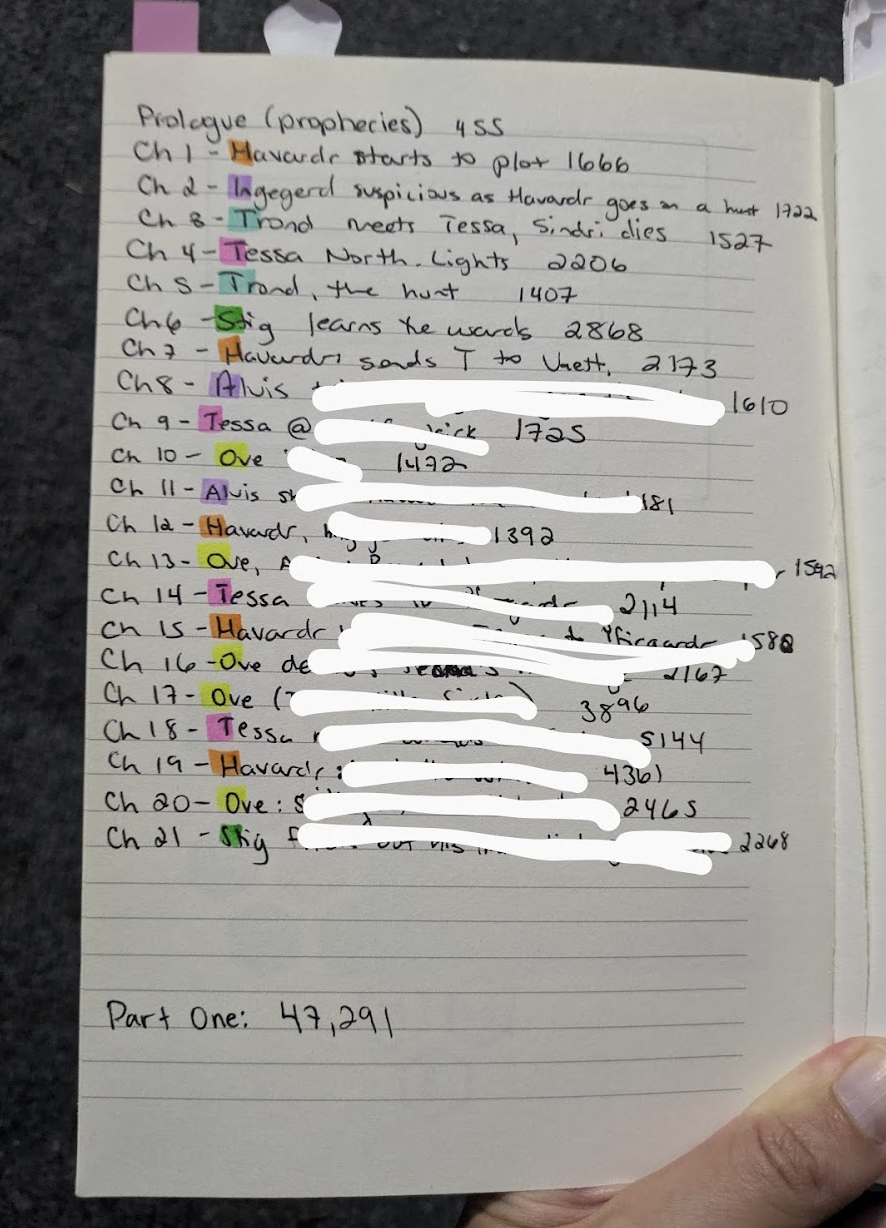
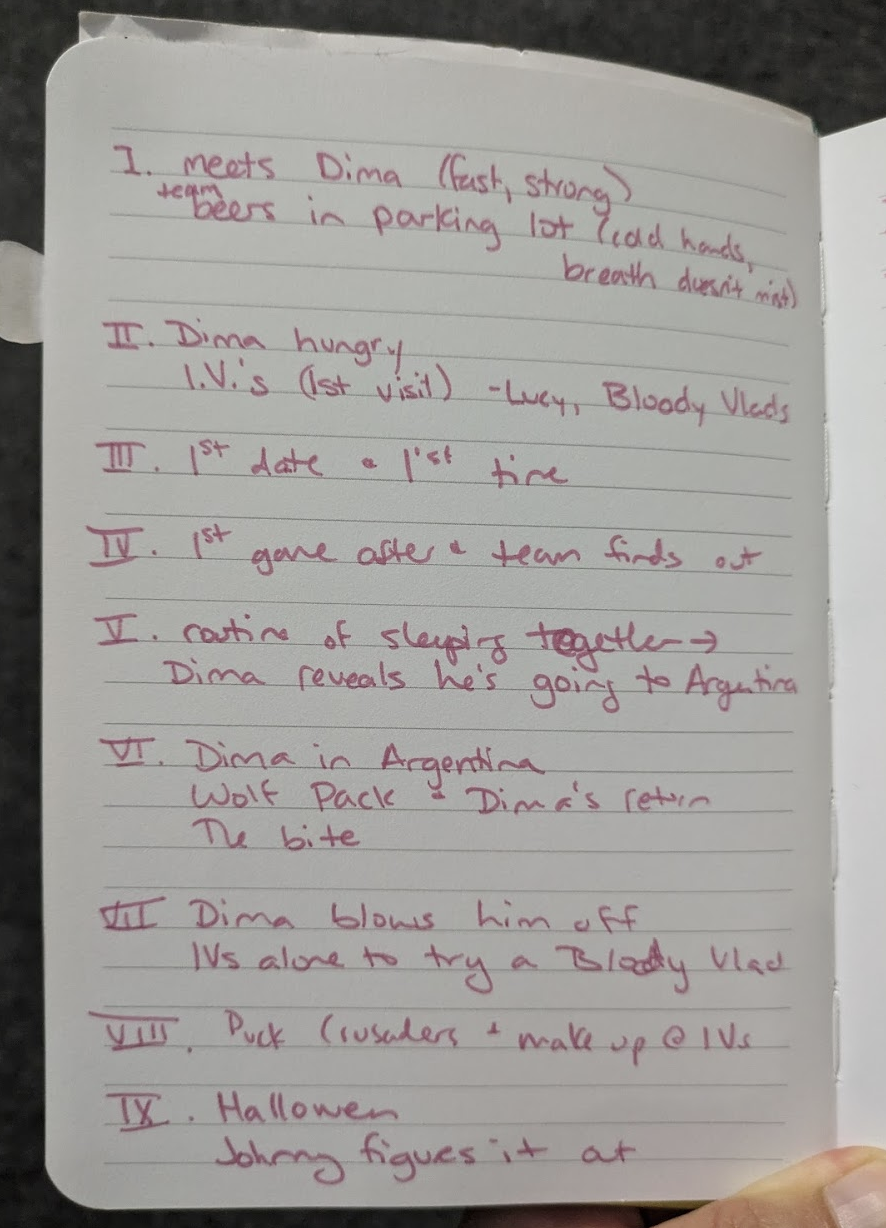
My own edits also tend to have charts and word count checks. This helps me get a final word count/page total for the book, and I like to make notes on what happens in each chapter. This way I can find chapters easily for promo material or short stories, or if I have to make specific edits.
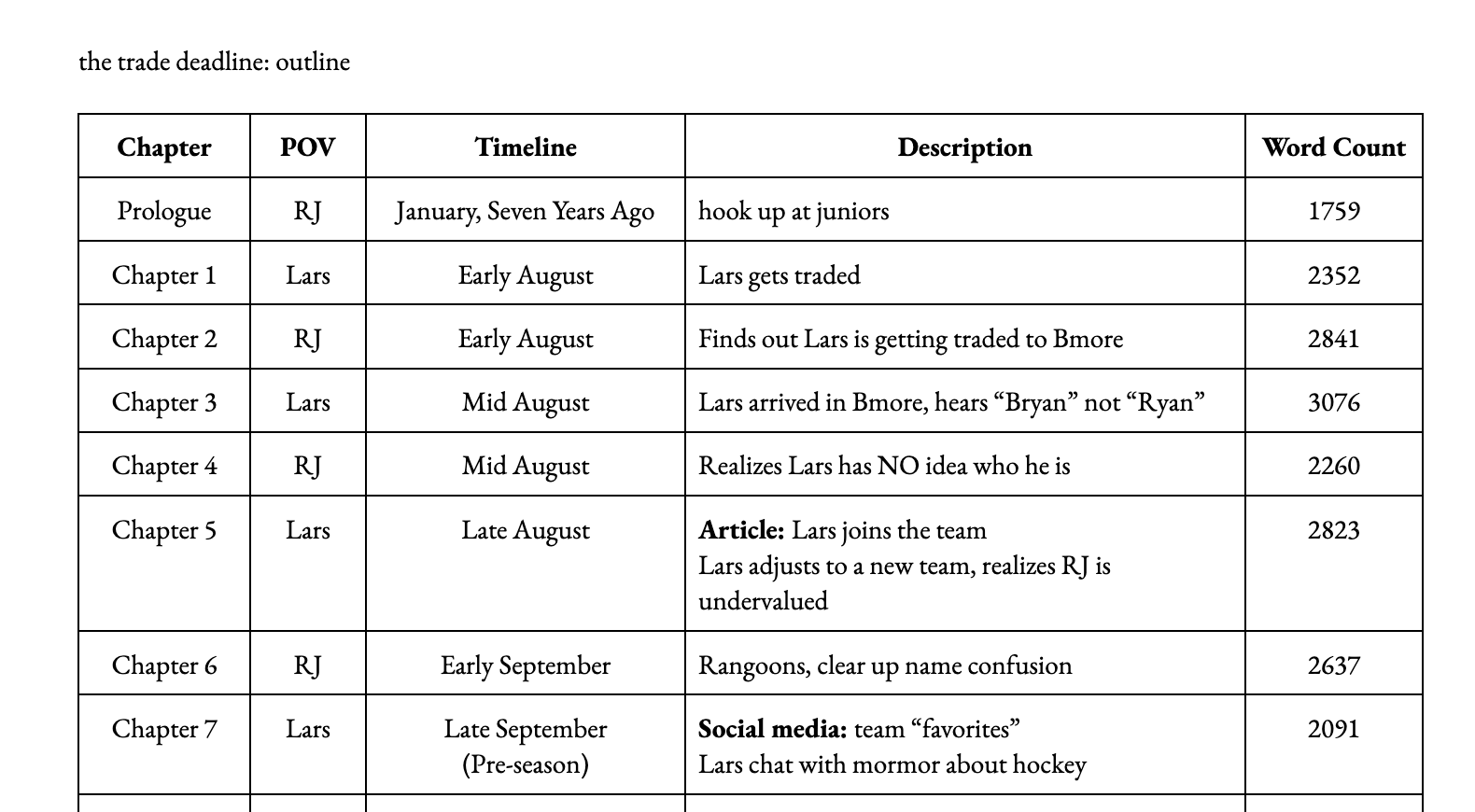
I ask for beta-readers among my writing groups, both in person and the circle of authors/readers I know online. At this stage, I am looking for readers who have an eye for writing, because they’re editors and/or authors themselves. This is to fix plot holes and tighten the narrative, so having someone with that specific experience is a huge help.
Line edits are the last editing stage, where someone goes through for that SPAG stuff that might’ve fallen through the cracks. Even with several rounds of edits and many eyes on a text, typos and mistakes make it through. I know that when I go back to re-read things for later promos or short stories, I notice things that need corrections or tweaks, and I try to update those manuscripts so that all future books and ebooks have the corrections. I don’t know how many times I’ve read a published novel (traditionally published, self-published, indie published, it really doesn’t matter) and seen a little mistake that’s made it through. As authors and editors, we do our best, but sometimes the mistakes are sneaky bastards.
ASSEMBLING A BOOK
It’s easy to overlook some of the steps that come into taking that finished manuscript and turning it into an actual book. A book isn’t just the words inside, but all the other pieces. There’s the formatting and typesetting, which I feel comfortable doing on my own for the hockey romances (I say that now, after having done it for Hockey Bois initially and wanting to rip my hair out) because of the software I’ve found since then.
For more ambitious projects like my historical fantasy series, I have a typesetter who does amazing work and can make those fantasy stories really pop. If you have the updated version of Hockey Bois through Duck Prints Press, you can see how awesome Hermit is at it.
There’s also the covers. I am not a good artist at all, so I work with some talented artists who can take the rough vision in my head and breathe life into it. There are a lot of artists who also do the cover design. For my hockey romances, I commission the art and then put the cover together myself, but I have a very specific, simple look that I’m going for and can manage on my own. For the historical fantasy series, I’m working with a cover artist who does the art and cover design as a whole. I went into each type of project knowing what I was looking for in an artist, and found someone who could handle those things for me.
Occasionally, there are other pieces of the book to consider: my historical fantasy series will require maps, so I commissioned a map artist; for Tessa of Hundrfeld, I also need family trees and glossaries; The Trade Deadline also had a glossary for the Swedish phrases; copyright info, dedications, acknowledgements, and author bio. Then there’s figuring out the ISBN—some publishing platforms like Amazon and draft2digital will provide one for free, or they can be purchased—and writing the summary that’ll appear online and on the back of the books.
PROMOTION
I am terrible at this side of things haha, but it’s a must for indie and self-publishing authors. There are definitely pieces that I should do more of (contacting libraries and local bookstores), and there are other things that are more in my wheelhouse.
Once I have enough of the other things done, I can set up Pre-Orders for the book. Once I have a firm release date, I can do a lot more with promotion. I can do cover reveals and excerpts (though obviously those are things that can happen before a release date). I can offer merchandise. I can do giveaways. I can do Q&A’s about the new book. A lot more doors open up when there’s an end date in mind, and I can plan social media posts around that.
Another big tool for promotion are Advanced Reader Copies (ARCs). ARCs are a great way to get readers and reviews before release. This was something I didn’t do with Hockey Bois (didn’t even know about it!) but started doing with The Trade Deadline and I do think it’s a really good way to spread word about a book. Who gets more excited than readers? Readers are way better at hyping up a book they love than the author, because imho it feels more genuine. Sure, I like my story but that’s a low bar haha. I wouldn’t have spent the time on it if I didn’t. With reviews, I can grab quotes that showcase what readers are saying and what they enjoy about the story to try and draw in other readers.
There are also book events. I just started doing them last year and I love participating, but I’m still working on how to tie those into the promotion of individual books. I have yet to have a book release event, though I know those have worked really well for some of the authors I know.
And that’s kind of the thing: these are the steps I take because they work for me. Other authors might have more or fewer steps, they might take a different approach to each stage, so this is more a window into my personal process. And honestly, I’m learning and adjusting all the time as I go on this writing journey—next year with new projects, I’m sure there’ll be changes!
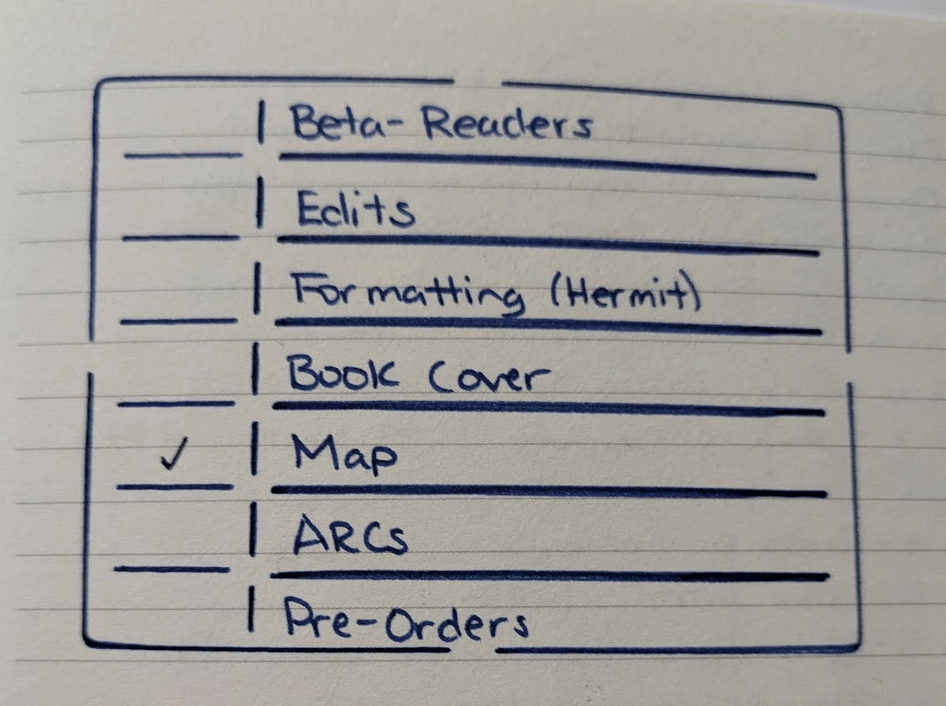
These are a lot of moving pieces that might be happening simultaneously. I know I have them framed as lists, but I’m necessarily going in that order. I don’t even have a completed draft of Drop the Gloves, but the cover is completed. Tessa of Hundrfeld has things like the map completed and edits underway, but the cover is a work in progress. The lists more give me a reminder of what I could/should be working on…and that satisfaction of checking something off as it’s completed.
Let me know if you have questions about any of these steps or if you think I missed something!
 A.L. Heard
Leave a comment